

Introduction
One of the most common and challenging product management interview questions is the Go/No-Go decision. In this type of case, you’re asked whether your company should launch a new product, enter a new market, or invest in a new initiative — and you must justify your answer with a clear, logical framework.
If you’re still exploring which career path fits you best — product management, consulting, or investment banking — read Comprehensive Guide to Careers in Management Consulting, Product Management, and Investment Banking 2025. It’s a great overview of the skills, roles, and growth paths across these top-tier business careers.
Go/No-Go questions test your ability to think strategically, prioritize trade-offs, and evaluate business decisions holistically. Interviewers aren’t just looking for creativity — they want to see structure, analytical rigor, and cross-functional thinking.
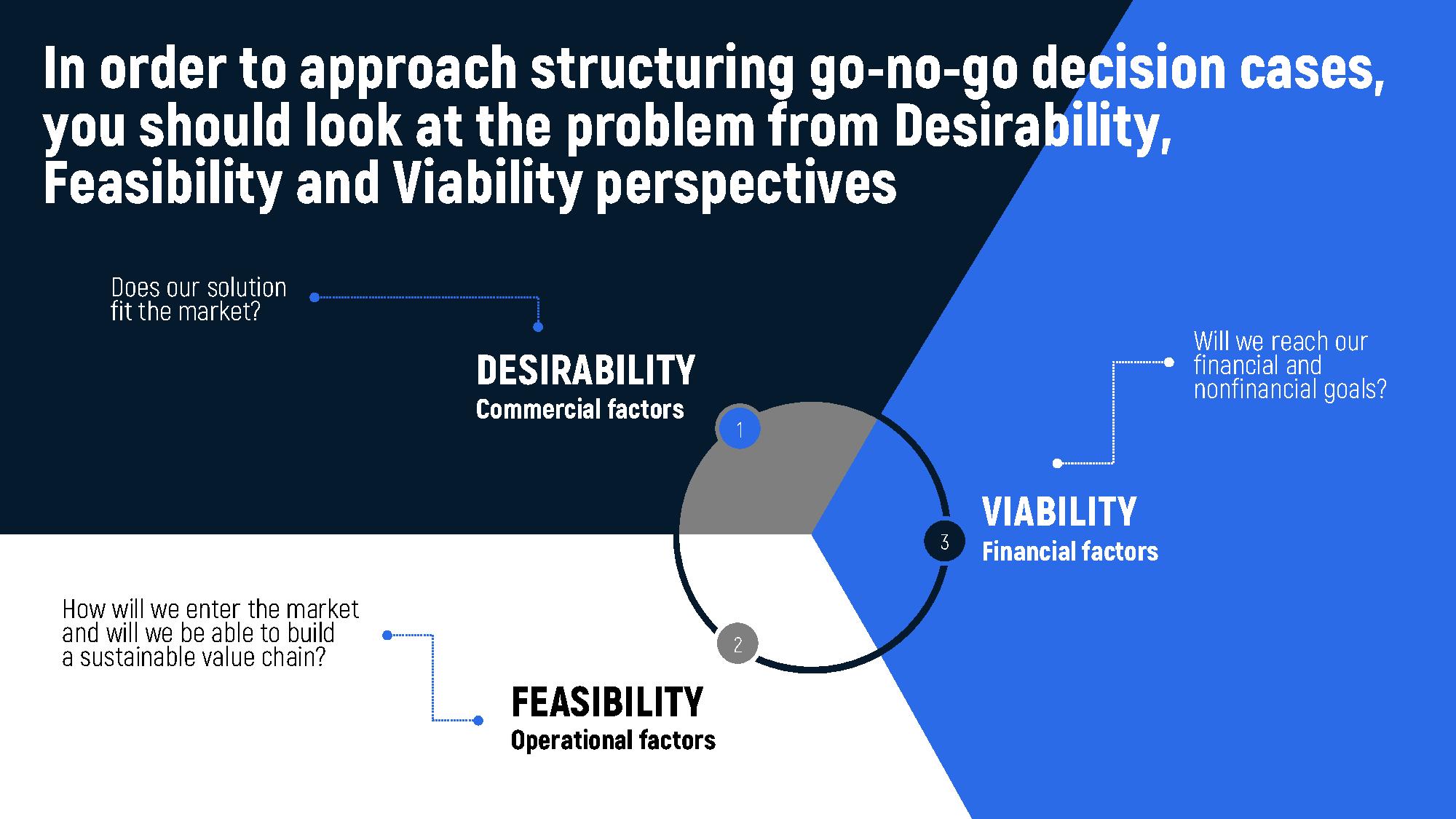
The best way to approach these questions is through the three-pillar Go/No-Go framework, which breaks your analysis into:
- Desirability – Do customers want it?
- Feasibility – Can we build and deliver it?
- Viability – Will it make financial and strategic sense?
By covering all three pillars, you show the interviewer that you can balance customer insight (Desirability), execution and operations (Feasibility), and financial logic (Viability) — exactly what great PMs do in real life.
This article will walk you step by step through each component of the framework using real business examples like Amazon entering the online grocery market and Airbnb expanding into luxury rentals. You’ll learn how to evaluate market demand, assess operational capabilities, and test financial outcomes — all while staying structured under interview pressure.
The Go/no-go framework explained
When you’re faced with a Go/No-Go decision question in a product management interview, the most effective way to structure your answer is around the three key perspectives:
- Desirability – Does the solution fit the market?
- Feasibility – Can the company build and sustain it operationally?
- Viability – Will it meet the company’s financial and strategic goals?
This simple but powerful framework mirrors how real product and strategy teams make investment decisions. It ensures your answer stays balanced — grounded in market understanding, operational reality, and financial logic.
Let’s break it down:
Desirability
This pillar focuses on the market and customers. You need to demonstrate that you understand who the target users are, what their needs look like, how big the market is, and how strong the competition may be. In the interview, this part answers the question: “Is there real demand for this product?”
Feasibility
Once demand is confirmed, you must show how your company could execute and deliver the product. This includes discussing R&D, production, partnerships, and distribution. Essentially, you’re addressing: “Can we actually build and scale this?”
Viability
Finally, even if customers want it and you can build it, the question remains: “Will this make business sense?” This is where you analyze the financial model — breakeven, payback, and key risks. Strong candidates also discuss non-financial metrics like brand value or strategic synergy.
Together, these three perspectives help you deliver a structured, end-to-end answer that resembles how senior PMs and business leaders think about product decisions.
Desirability: do customers want Ii?
The first question in any Go/No-Go decision is simple: does the market actually want what we’re offering?
This is the Desirability stage — the commercial analysis that helps you understand customer demand, competition, and your value proposition.
When interviewers ask you to assess a new product launch or market expansion, they want to see whether you can think like a strategist: segment customers, size the opportunity, and identify competitive gaps.
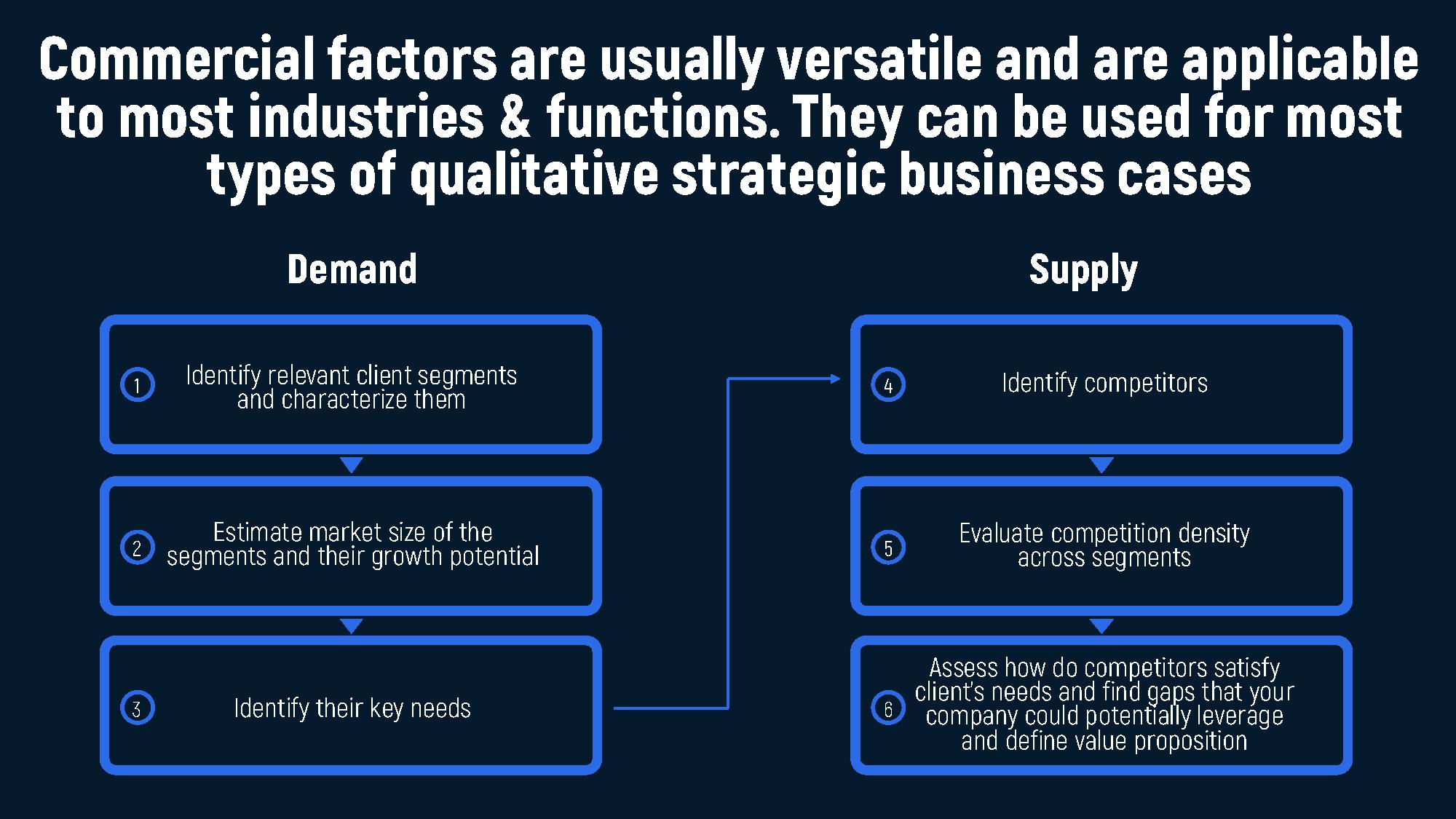
Here’s a structured way to analyze Desirability in your answer:
1. Identify target segments
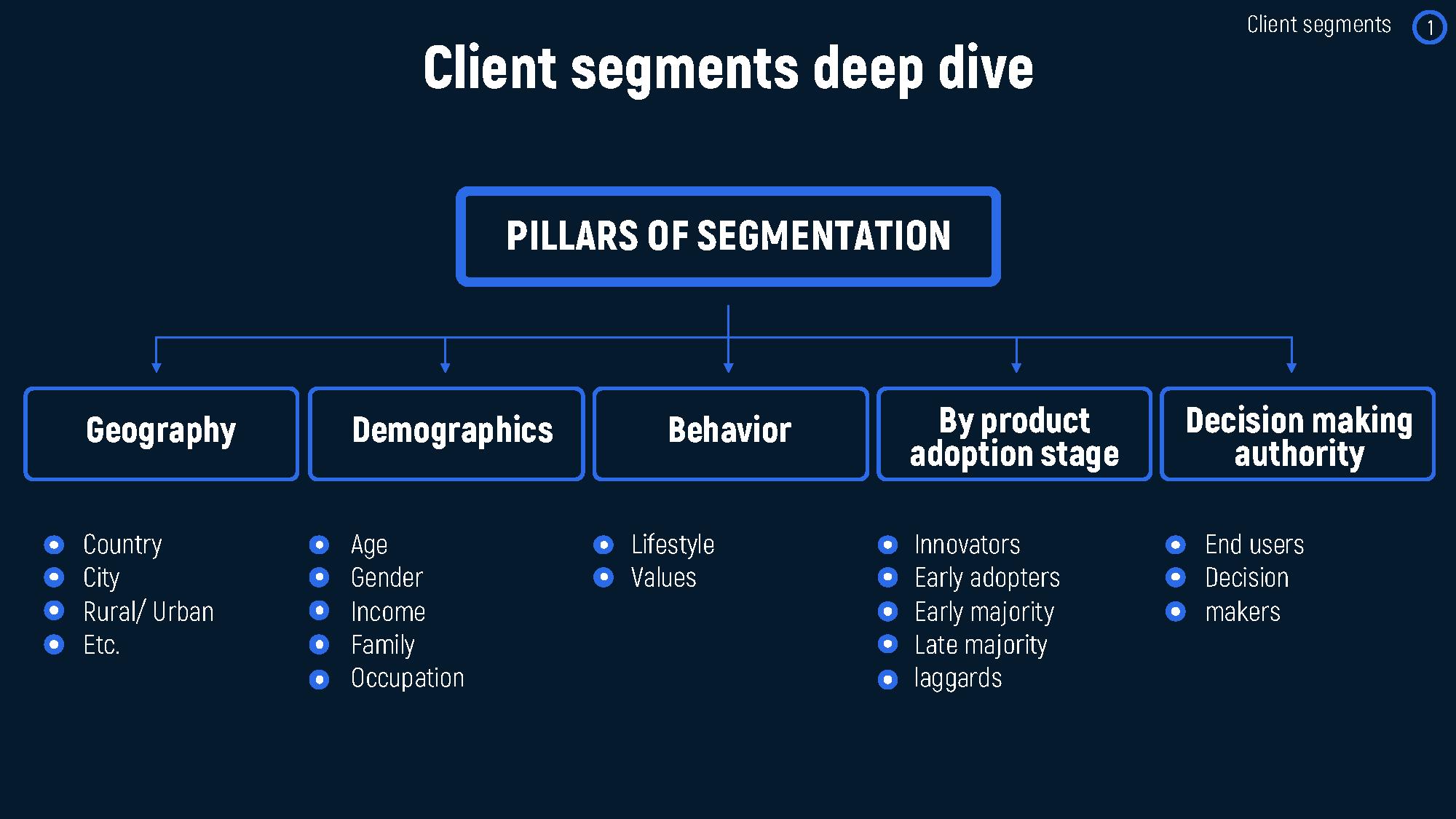
Start by dividing the market into meaningful customer segments. You can use several segmentation lenses:
- Geography: countries, cities, or urban vs rural areas.
- Demographics: age, income, family size, or occupation.
- Behavior: lifestyle, spending patterns, or frequency of product use.
- Adoption stage: innovators, early adopters, early majority, etc.
- Decision-making authority: end users vs decision makers (e.g., children vs parents, or employees vs CFOs).
2. Estimate market size and growth potential
Next, estimate the size and growth rate of your target segment. In an interview, you can structure this by combining top-down (industry size × segment share) and bottom-up (price × volume) logic.
You can add realism by citing growth trends — such as post-pandemic digital adoption or increased demand for sustainable products.
3. Identify client needs and value drivers
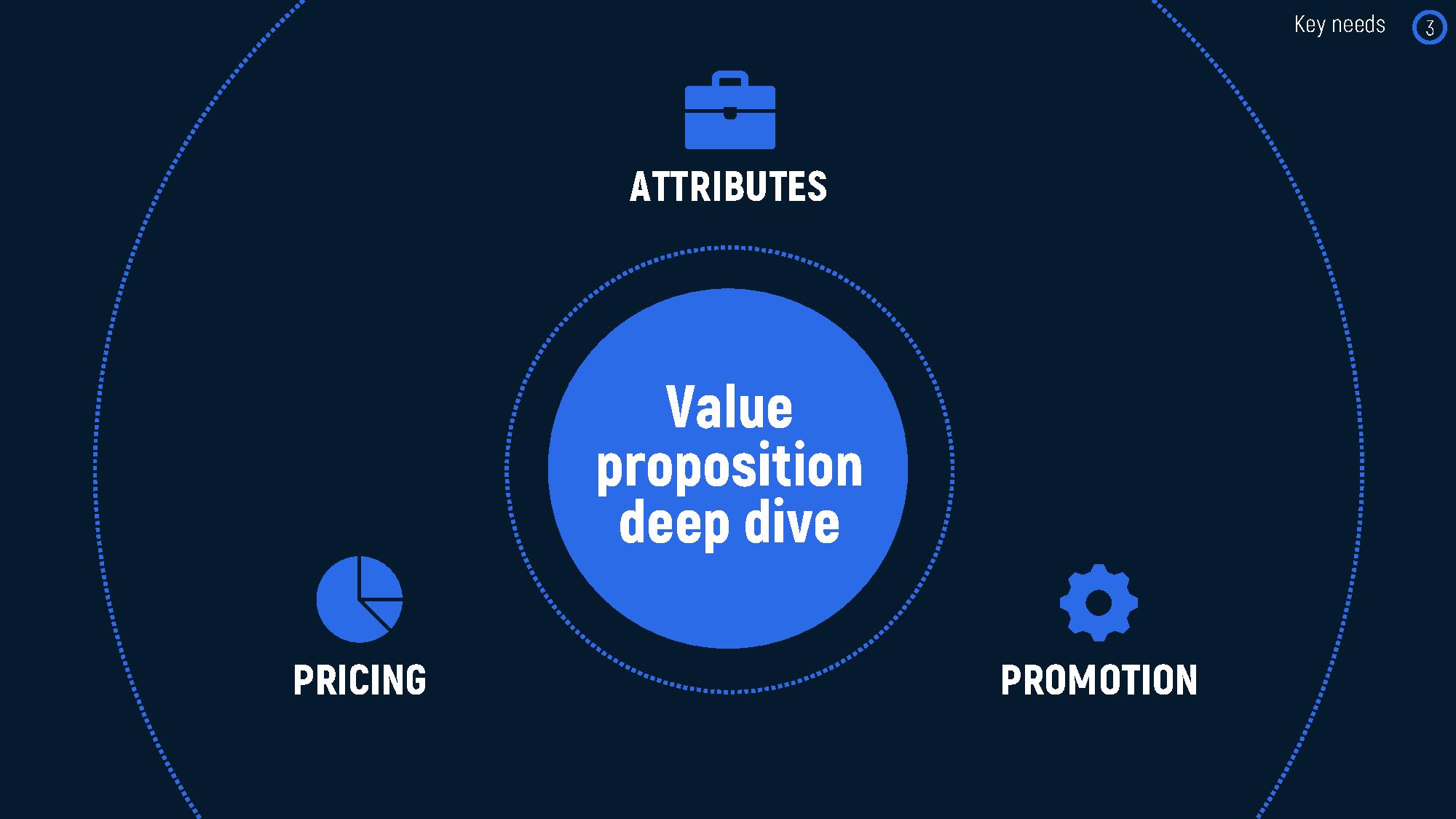
Every segment has unique motivations for purchase — these can be broken down into three dimensions:
- Product attributes: tangible features (e.g., speed, design, functionality).
- Pricing: perceived fairness, affordability, or flexibility (usage-based, bundled, freemium, etc.).
- Promotion: how customers discover and evaluate your product (online ads, events, direct marketing).
Example: For Amazon’s online grocery business, customer needs might include competitive pricing, fast delivery, and trustworthy product quality.
4. Evaluate competition and market structure
To judge market attractiveness, identify both direct and indirect competitors and evaluate competition density:
- Direct competitors: companies doing the same job in the same way (e.g., Slack vs Teams).
- Indirect competitors: those solving the same customer problem differently (e.g., Slack vs Email).
- Market structure: Is it a monopoly, oligopoly, or fragmented competition?
Understanding this helps you decide whether the market is saturated or offers room for differentiation.
Example: In the online grocery market, Amazon competes with Instacart, Walmart+, and local grocery chains — a fragmented but fast-growing market.
5. Compare value propositions
Finally, benchmark how your product’s pricing, features, and marketing stack up against competitors.
This will help you identify gaps — areas where your company can differentiate (for example, speed, convenience, or bundling with other services).
Interview tip:
When structuring your Desirability answer, speak as if you’re presenting to an executive:
“Let’s first confirm market demand. I’ll start by segmenting customers, estimating market size, and analyzing how well competitors serve these needs. That will help us see if the opportunity is attractive.”
This level of structure and clarity immediately signals product management maturity.
Feasibility: can we build and deliver it?
Once you’ve confirmed that customers want the product, the next question is: Can we actually deliver it?
This is the Feasibility stage, which examines whether your company has the operational capacity, technical expertise, and partnerships to launch and scale the product successfully.
In PM interviews, this is where you demonstrate that you can think beyond ideas — that you understand execution, not just strategy.
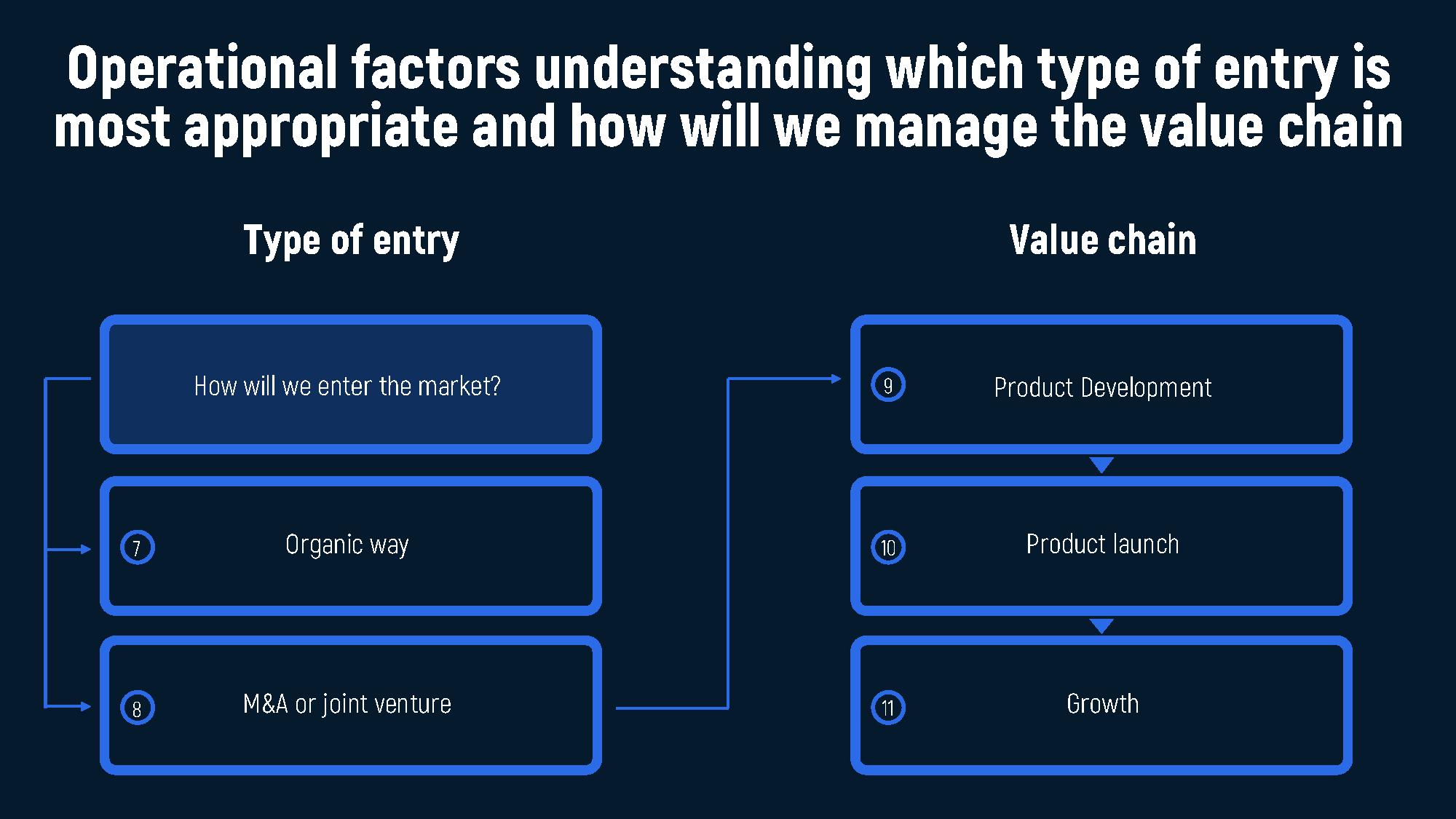
1. Decide on the type of market entry
There are two main paths to enter a market:
- Organic entry: building everything in-house — developing, testing, and scaling operations from scratch.
- Inorganic entry: accelerating growth through M&A, joint ventures, or strategic partnerships.
Example: Amazon’s grocery expansion leveraged an inorganic path by acquiring Whole Foods, while also pursuing organic growth through Amazon Fresh.
2. Analyze the value chain
Once the entry mode is defined, evaluate whether the company can build a sustainable value chain — from R&D to distribution.
This includes:
- R&D and product development: Can we design, test, and iterate quickly?
- Production: Do we have the right equipment, people, and suppliers?
- Distribution: How will we get the product to customers (wholesalers, retailers, direct-to-consumer)?
Example: For Airbnb entering the luxury vacation market, feasibility depends on curating premium properties, setting strict quality standards, and leveraging existing host networks — not just building from scratch.
3. Build operational sustainability
Operational feasibility also depends on whether these processes can scale reliably over time. You can highlight:
- The ability to hire and train people quickly.
- Access to reliable suppliers and logistics partners.
- The technology stack needed to support growth (e.g., infrastructure, automation, or integrations).
Framing it this way shows that you think like a PM who understands both execution risks and operational scalability — a key interview differentiator.
Interview tip:
In an interview, you can structure your answer like this:
“Let’s discuss Feasibility: can we build and sustain this? I’ll evaluate our type of market entry, the strength of our value chain, and whether operations can scale effectively.”
That structure demonstrates strategic and operational thinking in one go.
Are You Ready for a Career a Top Company?
Answer three questions and get a personalized breakdown.
Viability: will it make business sense?
Even if your product is desirable and feasible, the final question is: will it actually make financial and strategic sense for the company?
This is the Viability stage — the part of your answer where you show financial logic, business acumen, and awareness of risk. Interviewers use this section to see if you can connect the dots between user value and business outcomes.
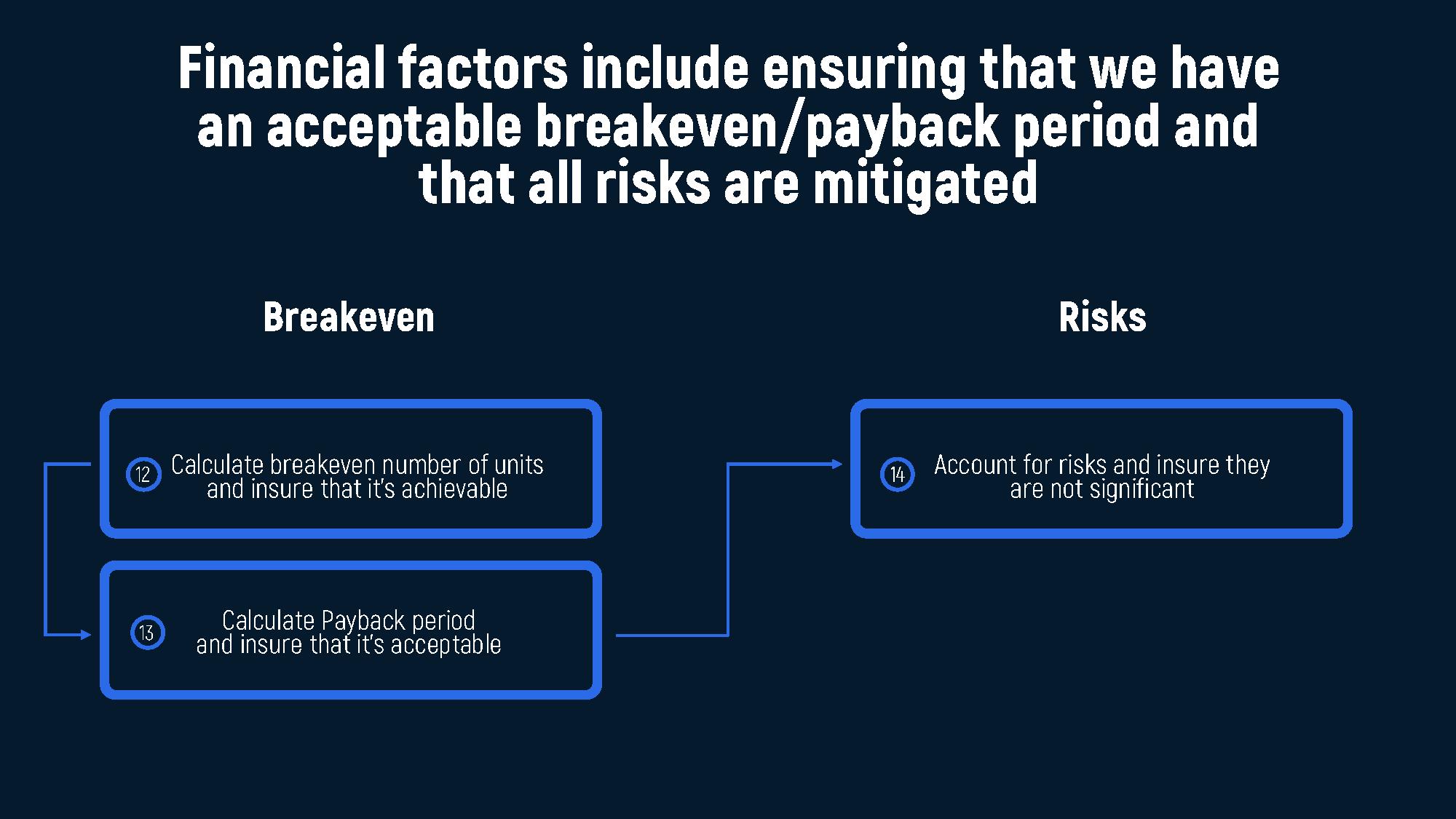
1. Estimate breakeven and payback period
Start by checking whether the project can reach breakeven within a realistic timeframe.
Two key formulas are often used:
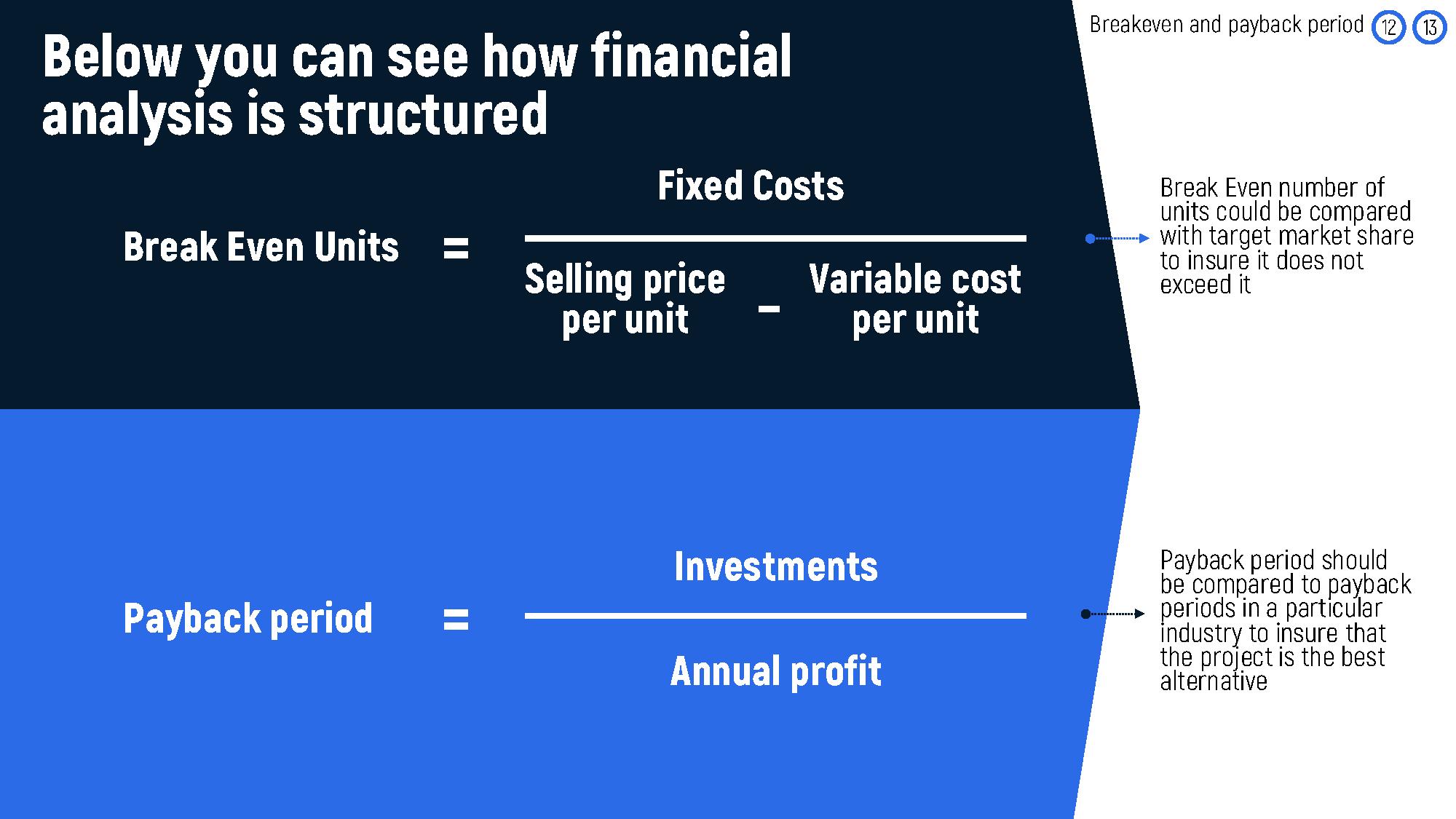
You can mention that these numbers should be compared to industry benchmarks — for example, tech startups might tolerate longer payback periods, while consumer goods expect faster returns.
2. Assess profitability and financial sustainability
Beyond the formulas, explain how you’d check if the business model is truly sustainable:
- Does the pricing structure support healthy margins?
- Are revenue streams diversified (e.g., subscriptions, one-time purchases, add-ons)?
- Can we scale profitably, or will costs rise faster than revenue?
Example: For Amazon’s grocery delivery, profitability depends on efficient logistics and economies of scale — not just subscription fees. Similarly, Airbnb Luxe earns higher margins through premium pricing and longer stays.
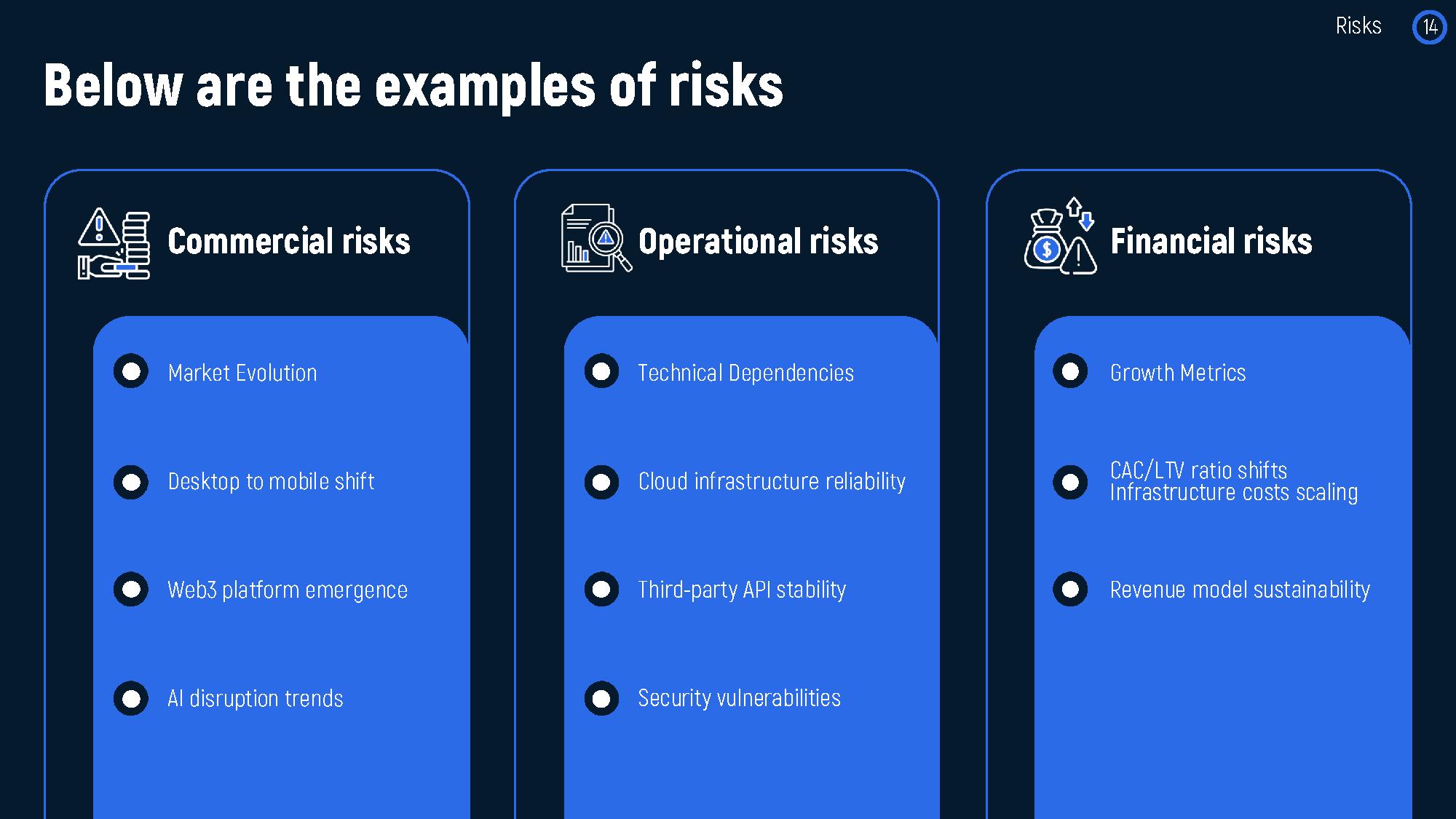
3. Identify key risks
No financial analysis is complete without understanding what could go wrong. Risks fall into three main categories:
- Commercial risks: demand fluctuations, new competitors, or changing customer behavior.
- Operational risks: technology failures, supply chain disruptions, or HR challenges.
- Financial risks: interest rate increases, funding shortages, or currency fluctuations.
Strong PM candidates not only name risks but also suggest mitigations — such as diversifying suppliers, testing MVPs before scaling, or building flexible pricing models.
4. Tie it all together
Finally, in an interview, you can summarize this part with a concise statement like:
“From a financial perspective, we’d reach breakeven in two years and maintain healthy margins. The biggest risks are operational scalability and competition, but these can be mitigated through partnerships and phased rollout. Based on this, I would recommend a Go decision.”
This closing demonstrates structured financial reasoning and confidence — both key signals for a strong PM candidate.
If you want to sharpen your analytical and pricing instincts for similar interview questions, read Pricing Cases for Interview: Mastering Different Pricing Strategies. It’s a perfect companion piece for Go/No-Go and market entry questions.
Interview tip:
Keep your financial discussion high-level but logical — you don’t need exact numbers unless provided. Focus on direction, trade-offs, and rationale behind your decision.
Real-world application: turning framework into interview answers
Understanding the Desirability–Feasibility–Viability framework is one thing.
Applying it fluently in a live interview, under time pressure and with incomplete data, is what separates good candidates from great ones.
This is where you transform theory into a structured, confident conversation.
Step 1. Clarify the objective
Start by restating the business goal or product question to ensure alignment. This buys time to think and shows that you listen carefully.
“Before I jump in, I’d like to clarify: are we evaluating whether to launch this product or whether to expand it into a new market?”
This small step signals analytical discipline — you never rush straight into solutions.
Step 2. Outline the framework
Next, frame your approach upfront. This is your roadmap for the interviewer:
“I’ll assess this Go/No-Go decision through three lenses — Desirability (is there demand), Feasibility (can we build it), and Viability (does it make business sense).”
This one sentence earns you structure points immediately.
Step 3. Dive into each area
Then, move systematically through each pillar:
- Desirability: Talk about customer segments, needs, market size, and competitors.
“Who are the target users? What’s the market size? How crowded is the space?”
- Feasibility: Evaluate operational capacity and scalability.
“Do we have the infrastructure, suppliers, or technology to deliver this product efficiently?”
- Viability: Assess the financial and risk aspects.
“Would this initiative be profitable in a reasonable timeframe, and what are the main risks?”
Each point should feel like a concise, data-driven argument — not a checklist.
Step 4. Synthesize and decide
End with a crisp recommendation that ties all three perspectives together:
“Given the strong customer demand, existing operational capacity, and acceptable financial outlook, I’d recommend a Go decision.
However, I’d suggest piloting in one market first to validate operational scalability before a full rollout.”
This final statement shows that you think like a real PM: strategic, risk-aware, and decisive.
Step 5. Communicate like a product leader
Interviewers care as much about how you communicate as what you say.
Keep your tone confident and collaborative. Use short transitions:
- “Let’s start with…”
- “Next, I’ll look at…”
- “Finally, from a financial standpoint…”
You’re not just solving a case — you’re simulating how you’d lead a product discussion in a real company.
For a full breakdown of product management interview types, frameworks, and preparation strategies, dive into The Ultimate Guide on Product Management Interviews (2025 Edition). It’s the go-to roadmap for mastering every PM interview format — from case questions to behavioral rounds.
Conclusion
Go/No-Go decision questions are more than just business cases — they’re a window into how you think as a product manager.
They test whether you can balance customer empathy, operational understanding, and financial reasoning under pressure — the same balance PMs must maintain every day on the job.
By structuring your answers around the Desirability–Feasibility–Viability framework, you demonstrate that you can approach complex product decisions in a clear, logical, and cross-functional way:
- Desirability shows that you understand the user and the market.
- Feasibility proves you can think through operations and delivery.
- Viability confirms that you’re financially and strategically grounded.
Together, these three pillars allow you to give a complete and persuasive recommendation — whether your decision is “Go” or “No-Go.”
Ready to take the next step toward your PM career? Join The Thinksters Product Management Course — a proven program that helps you build the exact skills top tech companies like Google, Amazon, and Apple look for in product managers.
Remember: the goal isn’t to sound like you memorized a framework; it’s to show structured thinking that naturally leads to a reasoned decision. The best candidates connect market logic, execution practicality, and financial sense into one cohesive story.
If you can master this balance, you’ll do more than just pass the interview — you’ll show that you already think like a real product leader.
And once you’ve mastered this interview framework, it’s worth seeing how these same principles guide real product work. A Day in the Life of a Product Manager: A Look into a PM’s Day-to-Day Tasks gives a behind-the-scenes view of how PMs make trade-offs, lead discussions, and turn strategic thinking into real results.
