In consulting recruitment, a strong case interview might open the door — but a strong behavioral interview will get you the offer. Unlike traditional interviews that focus on hypothetical questions, behavioral interviews dive into your real-life experiences, asking you to recall situations where you demonstrated the skills and mindset needed for success in consulting.
The principle is simple: past behavior is the best predictor of future performance. Firms use this method to assess whether you can thrive in their culture, handle high-pressure client situations, and collaborate effectively with diverse teams.
For candidates, this is more than just a conversation — it’s a strategic storytelling opportunity. Beyond technical expertise, consulting firms are looking for qualities like problem-solving, leadership, teamwork, and adaptability. To stand out, you’ll need to prepare thoughtfully, reflect on your experiences, and deliver your stories in a clear, structured, and impactful way.
In this article, we’ll break down what consulting behavioral interviews really assess, how to prepare effectively, and proven frameworks for answering with confidence.
Typical behavioral interview questions
In a behavioral interview, the focus is on what you’ve done before — and how you did it. Instead of hypothetical scenarios, interviewers want specific stories from your past that reveal how you think, act, and solve problems. Some of the most common questions include:
- Tell me about a challenging project you worked on. How did you handle it?
- Describe a time you had to collaborate with a difficult colleague. How did you manage the relationship?
- Give me an example of a project you had to complete under tight deadlines. How did you get it done?
- Tell me about a time you demonstrated leadership.
- Describe a mistake you made. How did you handle it and what did you learn?
These questions often start with phrases like “Tell me about a time when…” or “Give me an example of…” — and they’re designed to uncover your real-world problem-solving, adaptability, and interpersonal skills.
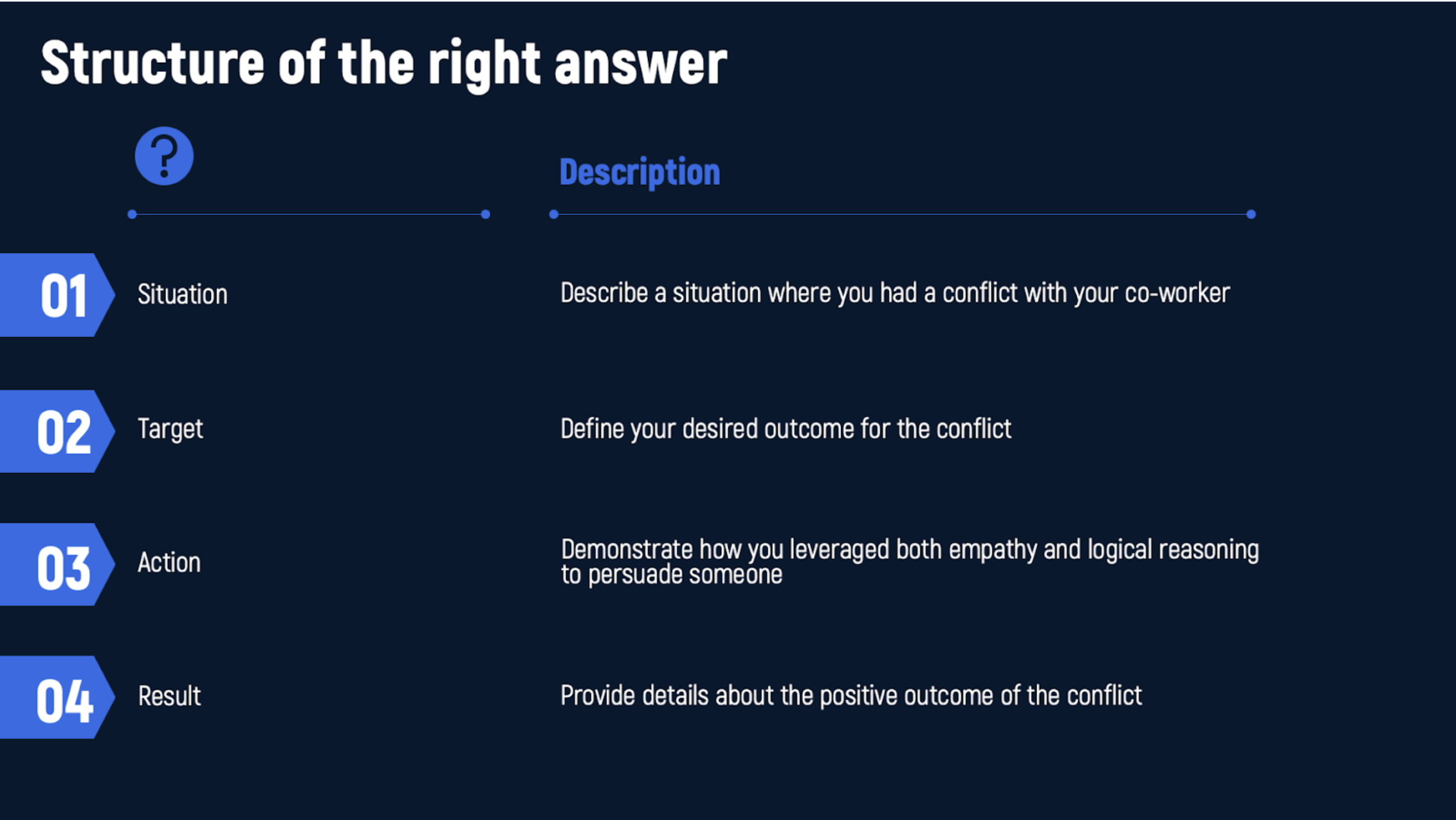
One of the best tools for answering them is the STAR method:
- Situation – Set the scene with relevant background.
- Task – Explain the challenge or responsibility you faced.
- Action – Describe the steps you took to address it.
- Result – Share the outcome and what you learned.
Using STAR keeps your stories clear, concise, and impactful — while ensuring you highlight the competencies consulting firms value most.
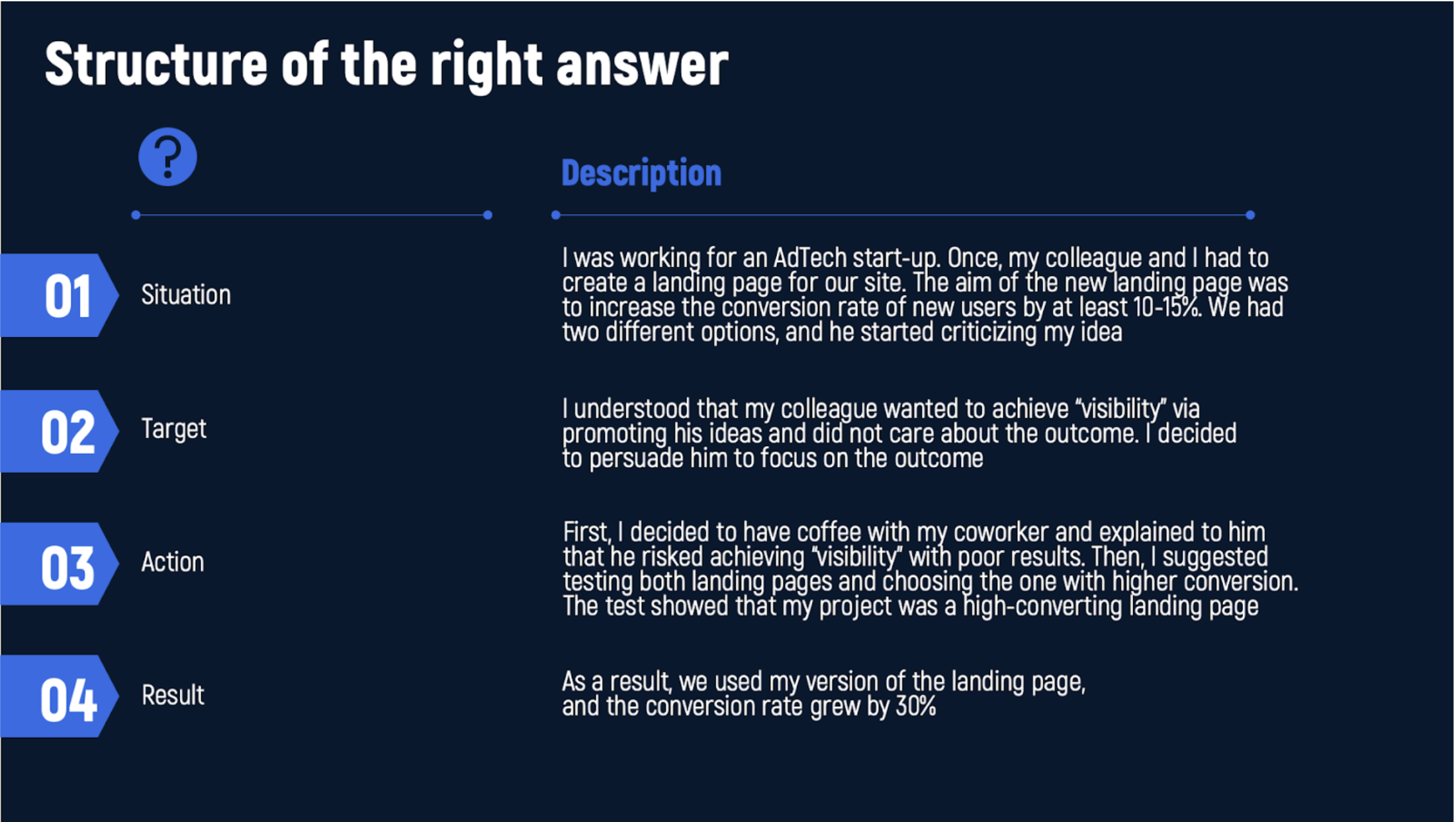
Example: applying the STAR method in a consulting interview
It’s also important to adapt your answers to the type of interviewer you’re speaking with:
- Soft-oriented interviewers focus on personality and emotional intelligence. Emphasize teamwork, communication, and relationship-building.
- Technical-oriented interviewers prioritize hard skills and industry knowledge. Highlight your analytical thinking, quantitative skills, and familiarity with relevant tools or trends.
Matching your examples to the interviewer’s style not only makes your answers more relevant — it makes them more memorable.
Demonstrating leadership and avoiding common pitfalls
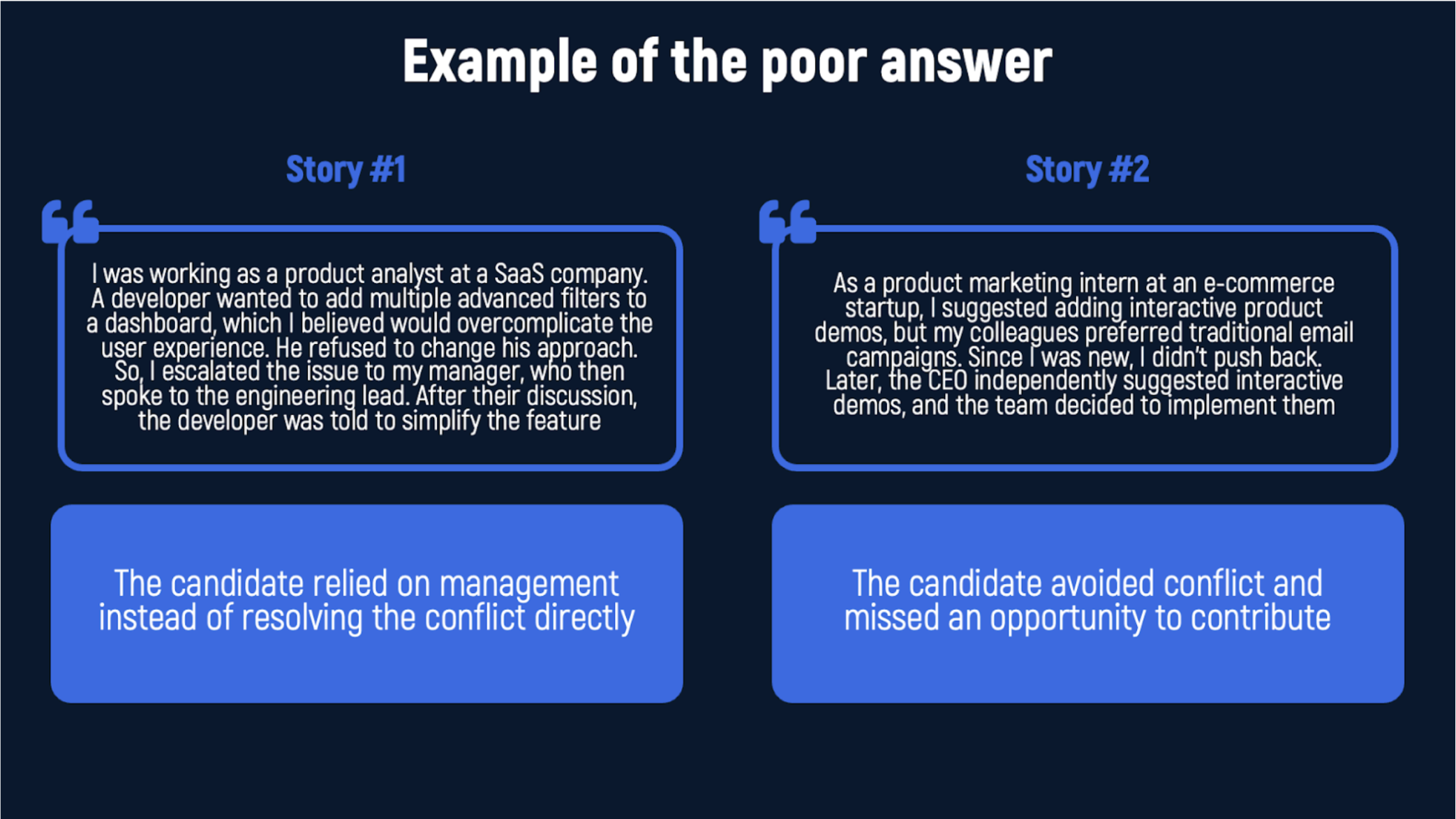
Behavioral interviews are not just about recounting past experiences — they’re also about showing ownership, initiative, and leadership potential. Many candidates stumble by relying too heavily on management to resolve conflicts or by avoiding difficult situations altogether. These behaviors can signal a lack of proactivity and limit your impact in the eyes of the interviewer.
What to Avoid:
- Escalating issues too quickly instead of attempting resolution yourself.
- Failing to speak up when you have valuable input.
- Avoiding conflict entirely, even when constructive discussion could lead to better results.
Are You Ready for a Career a Top Company?
Answer three questions and get a personalized breakdown.
Turning the interview around — taking the lead
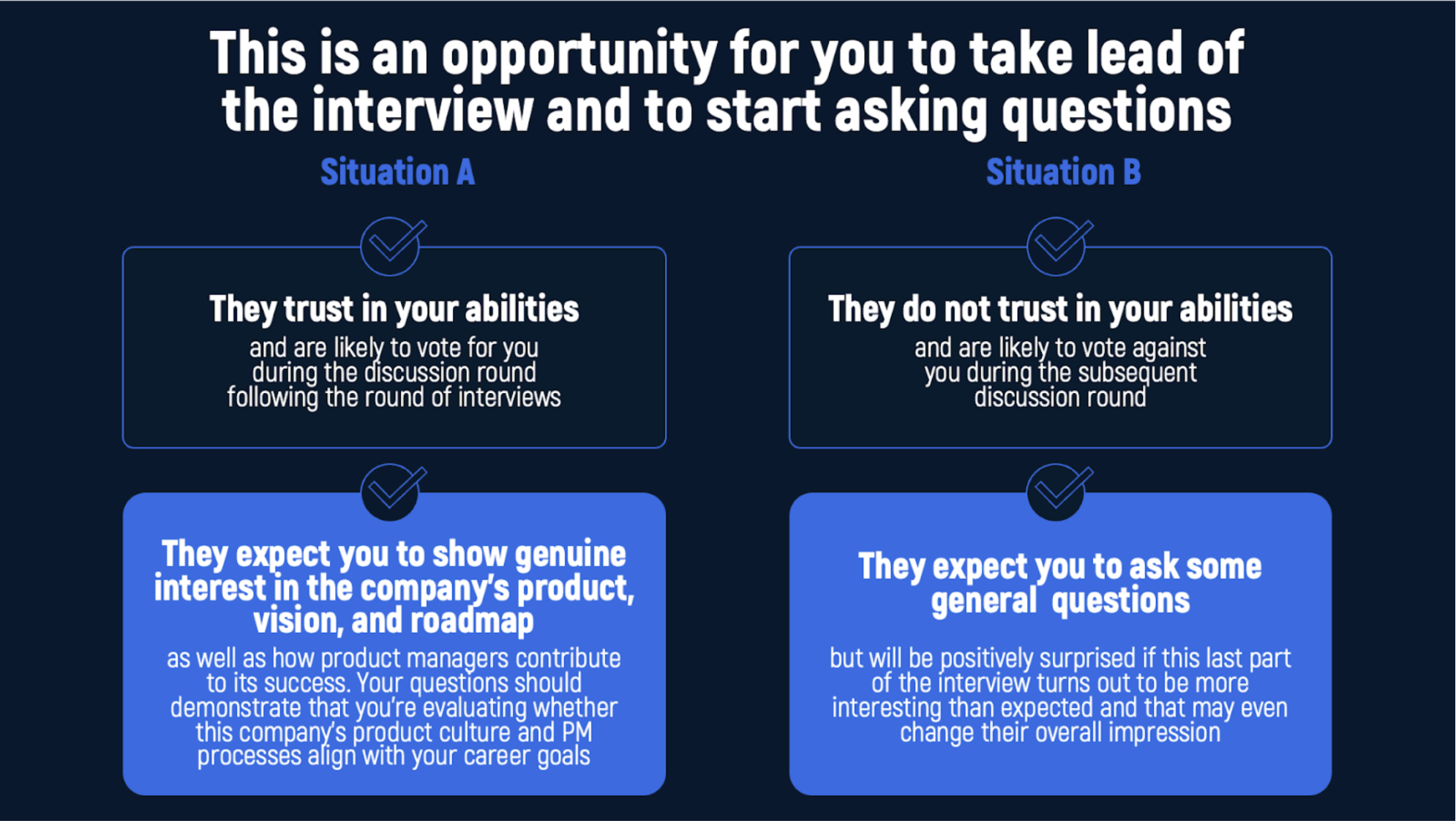
Your chance to demonstrate leadership doesn’t end when the interviewer stops asking questions. When they say “Do you have any questions for me?”, they’re not just being polite — they’re giving you an opportunity to show strategic thinking, curiosity, and genuine engagement.
This moment can have a surprising influence on their final decision. Strong, thoughtful questions can:
- Signal that you’ve researched the firm and understand its culture and business model.
- Show you’re evaluating them as much as they’re evaluating you, positioning you as a confident and discerning candidate.
- Reinforce that you’re thinking long-term about your fit and contribution to the team.
Examples of impactful questions:
- “What does success look like in this role after the first 6–12 months?”
- “How does the firm adapt its approach to client work in rapidly changing industries?”
- “Can you share an example of a recent project that really challenged the team?”
These types of questions align with the qualities consulting firms prize — curiosity, analytical thinking, and a focus on impact.